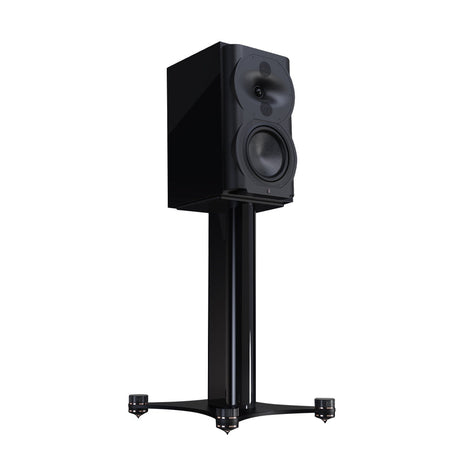
Vienna Acoustics Maestro Grand Reference
Need advice? Want a price match?
Talk to Mike
Third-generation owner
Call or text: 410-239-2020Yes, that's literally his cell
At this level, every detail matters: your room, your system, what you’re driving it with, what you’re listening to. I handle these orders personally because an investment like this deserves more than an Add to Cart button. We’ll work through system synergy, I’ll make sure the setup is right, and we’ll coordinate delivery so it arrives exactly how it should. A few of our brands require this direct approach, but at this price point, it’s how I’d do it anyway. Use the button above, or call/text me directly at 410-239-2020.
Family-Owned Authorized Dealer
Family-Owned Authorized Dealer
We're an authorized dealer for every brand listed on this site, so your warranty is valid and fully supported. We're a real brick-and-mortar shop in Chestertown, MD with shelves of actual inventory, not a drop-shipper. Family-owned and run for three generations, since 1978.
*Free Delivery and Shipping
*Free Delivery and Shipping
Free shipping for most items over $100! Local delivery up to 500 miles more with minimum qualifying purchase.
See our shipping policies for details. We will contact you after your order.

Vienna Acoustics Maestro Grand Reference
Most center channels are afterthoughts. They use smaller drivers, cheaper crossovers, and get stuck on a shelf to fill a gap between the towers. The Vienna Acoustics Maestro Grand Reference is not that speaker. It uses the same flat X4P Composite Cone driver technology as Vienna's Reference floorstanders and a 1.1-inch hand-coated silk dome tweeter, runs a genuine 2.5-way crossover with Bessel filters, and reaches down to 28 Hz. Vienna built it to be a full-range speaker that happens to sit horizontally.
Key Features of the Vienna Acoustics Maestro Grand Reference
- Dual 6" X4P Composite Cone mid-woofers: Flat spidercone with glass fiber reinforcement and recessed fabric center-cone for rigid, piston-like diaphragm movement
- 1.1" hand-coated silk dome tweeter: Extends well down into the midrange
- 2.5-way crossover with Bessel filters: 6 dB and 12 dB slopes using MKP capacitors (1% tolerance), air-core coils (0.7% tolerance), and inductance-free metal film resistors
- Dual front-ported bass reflex: Impulse-optimizing QB3 alignment with bass down to 28 Hz
- Full-range LCR capability: Can serve as a left, center, right, or surround speaker, not limited to center channel duty
- 91 dB sensitivity into 4 ohms: Vienna recommends 30 to 300 watts of amplification
- Piano finish: True Piano Black or Piano White
Vienna's X4P Composite Cone: The Driver That Defines the Reference Series
Two 6-inch X4P Composite Cone mid-woofers sit at the heart of the Maestro Grand Reference. The cone is Vienna's new X4P mixture, reinforced with glass fibers. It is flat rather than conventional, a patented spidercone with rear bracings Vienna lists at 18 mm (bass) and 14 mm (mid). That stiff, light construction lets the diaphragm move as a single piston.
Each driver also uses a recessed, double-coated fabric dome instead of a standard dust cap.

The Maestro Grand Reference Tweeter
The 1.1-inch hand-coated silk dome tweeter extends well down into the midrange, and Vienna lists the same 1.1-inch hand-coated silk dome for the Beethoven Concert Grand Reference. For a center channel, that midrange reach matters more than in most applications. Dialogue intelligibility depends on a clean, uncolored handoff from mid-woofer to tweeter, and the silk dome handles it without the metallic edge that aluminum or beryllium alternatives can introduce over long listening sessions.
A 2.5-Way Crossover in a Center Channel
Most center channels run a simple two-way crossover. The Maestro Grand Reference uses a 2.5-way crossover with 6 dB and 12 dB Bessel filters.
The crossover components are MKP capacitors at 1% tolerance, coils at 0.7% tolerance and inductance-free metal film resistors at 1% tolerance. Vienna uses soft Bessel slopes because they exhibit the least phase shifting.
Front Ports and Cabinet Construction
The Maestro Grand Reference uses a dual front-ported bass reflex enclosure tuned to a QB3 (Quasi-Butterworth 3rd order) alignment. Front ports are a practical advantage for a speaker that typically sits on a shelf or credenza below a display. The QB3 tuning keeps bass tight and defined, favoring transient speed over maximum low-end volume.
It comes in true Piano Black or Piano White. At 24 inches wide, the Maestro Grand Reference accommodates its horizontal driver array without the compromises that narrower center channels make by stacking drivers vertically or angling them off-axis.

Built to Match Vienna's Reference Floorstanders
Vienna designed the Maestro Grand Reference as a no-compromise tonal match for three specific floorstanders: the Liszt Reference, the Beethoven Concert Grand Reference, and the Beethoven Baby Grand Reference. All four use Vienna's flat X4P Composite Cone drivers, so panning effects and dialogue move across the front soundstage without tonal shifts. The Maestro Grand Reference is also capable enough to run as a left, center, or right speaker in an LCR configuration, or as a high-performance surround in larger systems.
Explore the Vienna Acoustics Range
For a more compact center channel option, the Theatro uses Vienna's XPP cone technology in a smaller enclosure. For surround duty, the Waltz Grand on-wall speaker rounds out a full Vienna system. On the bookshelf side, the Haydn SE Signature shares the same hand-coated silk dome tweeter in a compact two-way design. And for a complete floorstanding system, pair with the Bach Ultimate Edition or step up to the Beethoven Concert Grand Reference.
The Listening Room Difference
We're a third-generation family business with a brick-and-mortar showroom in Chestertown, Maryland, and a reputation built on exceptional service and relentless passion for hifi. Whether you're visiting in person or ordering online, we bring decades of experience, personalized service, and honest guidance to every interaction. We don't just ship boxes. We help build systems, answer your questions like real humans, and make sure every detail of your setup is right, from the cables to the final connection. Our passion is helping you get the most out of your gear, with support that lasts well beyond the sale.
Maestro Grand Reference Specifications
| Specification | Detail |
|---|---|
| Type | 2.5-Way Center Channel Speaker |
| Impedance | 4 Ohms |
| Frequency Response | 28 - 23,000 Hz |
| Sensitivity | 91 dB |
| Recommended Amplifier Power | 30 - 300 Watts |
| Drive Units | 2x 6" Composite Cone (Flat X4P Spidercone with recessed fabric center-cone), 1x 1.1" Hand-Coated Vienna Acoustics Silk Dome |
| Bass System | Bass Reflex, Dual Front Ported |
| Bass Alignment | Impulse Optimizing QB3 (Quasi-Butterworth) |
| Crossover | 2.5-Way, 6 dB and 12 dB Bessel Filters |
| Crossover Components | MKP Capacitors (1% tolerance), Air Coils (0.7% tolerance), Inductance-Free Metal Film Resistors (1%) |
| Dimensions (W x H x D) | 24 x 7 x 11 inches (610 x 175 x 285 mm) |
| Weight | 33 lbs (15 kg) |
| Finishes | Piano Black, Piano White |